📞  — free, 24/7
— free, 24/7 — free, 24/7| Package | Price per Dose | Price | |
|---|---|---|---|
| 360 pills | £0.86 | £412.08 £309.06 Free shipping | |
| 180 pills | £0.91 | £216.48 £162.36 Free shipping | |
| 120 pills | £0.92 | £147.80 £110.85 | |
| 90 pills | £0.96 | £114.95 £86.21 | |
| 60 pills | £1.01 | £80.61 £60.46 | |
| 30 pills | £1.15 | £46.27 £34.70 | |
| 360 pills | £1.29 | £619.62 £464.71 Free shipping | |
| 240 pills | £1.31 | £419.54 £314.66 Free shipping | |
| 180 pills | £1.32 | £318.01 £238.51 Free shipping | |
| 120 pills | £1.34 | £214.99 £161.24 Free shipping | |
| 90 pills | £1.38 | £165.72 £124.29 | |
| 60 pills | £1.40 | £113.46 £85.10 | |
| 30 pills | £1.43 | £58.22 £43.66 | |
| 240 pills | £1.98 | £634.55 £475.91 Free shipping | |
| 180 pills | £2.00 | £480.76 £360.57 Free shipping | |
| 120 pills | £2.03 | £323.99 £242.99 Free shipping | |
| 90 pills | £2.05 | £246.35 £184.76 Free shipping | |
| 60 pills | £2.09 | £167.21 £125.41 | |
| 30 pills | £2.24 | £89.57 £67.18 | |
| 180 pills | £2.65 | £636.04 £477.03 Free shipping | |
| 120 pills | £2.74 | £438.95 £329.22 Free shipping | |
| 90 pills | £2.77 | £331.45 £248.59 Free shipping | |
| 60 pills | £2.80 | £223.95 £167.96 Free shipping | |
| 30 pills | £2.91 | £116.45 £87.33 |
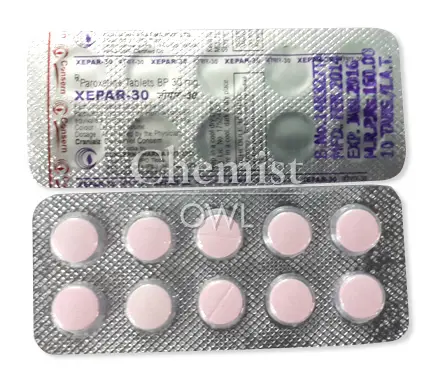
Depressive disorders, generalized anxiety, social anxiety, and related affective conditions commonly present with persistent low mood, excessive worry, sleep disturbance, and impaired daily functioning. Paroxetine is a selective serotonin reuptake inhibitor (SSRI) used to address these symptoms by modulating serotonergic signaling. It increases extracellular serotonin in key brain circuits involved in mood and anxiety regulation, contributing to symptom relief over weeks of therapy.
As a psychotropic agent, Paroxetine is formulated for oral administration and prescribed in various dosages tailored to the diagnosed condition and patient tolerance. Its pharmacodynamic effects align with other SSRIs, but individual response and adverse-effect profiles require careful clinical monitoring and dose adjustments during initiation and maintenance therapy.
Paroxetine is approved for major depressive disorder and multiple anxiety disorders, including generalized anxiety disorder, panic disorder, social anxiety disorder, and obsessive-compulsive disorder in many jurisdictions. It may also be used off-label for vasomotor symptoms associated with menopause or other conditions where serotonergic modulation is clinically advantageous, under physician supervision.
Therapy typically begins at a modest dose with gradual titration to achieve clinical response while minimizing adverse effects. Dosing considerations include prior antidepressant exposure, comorbid psychiatric or medical conditions, and risk of suicidality in younger patients. A structured tapering plan is advised when discontinuation is anticipated to lessen withdrawal phenomena.
Contraindications include hypersensitivity to paroxetine or to other SSRIs. It should not be used concomitantly with monoamine oxidase inhibitors or within a washout period after MAOI therapy, due to the risk of serotonin syndrome. Caution is warranted with concurrent use of other agents that markedly increase serotonin levels, such as certain serotonergic antidepressants or linezolid and intravenous methylene blue.
Precautions: Serotonin syndrome is a potential risk with combined serotonergic therapy; clinicians should monitor for agitation, hyperthermia, autonomic instability, and neuromuscular abnormalities. In children and adolescents, there is an elevated risk of suicidality during early treatment and after dose changes, necessitating close monitoring and timely intervention if symptoms emerge. Hyponatremia, sometimes severe, can occur, particularly in older adults or those on diuretics, requiring electrolyte monitoring. Paroxetine may induce manic or hypomanic episodes in susceptible patients with bipolar disorder; if mood elevation occurs, treatment should be reassessed.
Additional cautions include dose modification in hepatic impairment, awareness of discontinuation effects with abrupt cessation, and careful consideration during pregnancy and lactation. Elderly patients, those with seizure disorders, glaucoma, significant cardiovascular disease, or a history of abnormal bleeding should be managed with careful risk–benefit assessment and appropriate surveillance during therapy.
Common adverse effects include nausea, headache, insomnia or somnolence, increased sweating, and alterations in sexual function. Patients may also notice appetite changes and weight fluctuation during extended treatment. These events are often dose-related and may improve with time or dose adjustments.
Occasional effects encompass dry mouth, dizziness, fatigue, tremor, blurred vision, and minor gastrointestinal upset. Sleep disturbances and anxiety can persist in the early phase of therapy, requiring supportive care and, if necessary, diagnostic reassessment.
Rare but serious events include hyponatremia, seizures in predisposed individuals, and signs consistent with serotonin syndrome. Dermatologic reactions such as rash or angioedema and, less commonly, cardiac conduction abnormalities or hepatic injury have been reported. If any serious or persistent symptom emerges, evaluation by a clinician is warranted and therapy may need modification or discontinuation.
Serotonergic interactions are central to paroxetine safety. Co-administration with MAO inhibitors or other serotonergic agents (for example other SSRIs, SNRIs, TCAs, tramadol, triptans, or certain herbal products) can precipitate serotonin syndrome. When switching from or to an MAOI, a physician-guided washout period is essential to minimize risk.
Paroxetine inhibits CYP2D6, which can raise plasma levels of co-prescribed drugs metabolized by this enzyme. Careful monitoring and dose adjustments may be required for substrates such as certain beta-blockers, antiarrhythmics, and other psychotropic medications. In addition, concomitant use with NSAIDs, anticoagulants, or antiplatelet agents may increase bleeding risk, and alcohol or sedatives can amplify central nervous system depression.
14–21 days. Free from £149.31 .
5–9 days. £22.40
−10% when paying with cryptocurrency.
−10% on all repeat orders.
All orders are packed in neutral, unbranded boxes with no product name on the outside.