📞  — free, 24/7
— free, 24/7 — free, 24/7| Package | Price per Dose | Price | |
|---|---|---|---|
| 180 pills | £1.30 | £335.25 £234.68 Free shipping | |
| 120 pills | £1.47 | £252.65 £176.85 Free shipping | |
| 90 pills | £1.62 | £208.92 £146.24 | |
| 60 pills | £1.56 | £134.42 £94.09 | |
| 30 pills | £1.89 | £80.97 £56.68 | |
| 180 pills | £1.56 | £401.66 £281.16 Free shipping | |
| 120 pills | £1.61 | £275.33 £192.73 Free shipping | |
| 90 pills | £1.67 | £213.78 £149.64 | |
| 60 pills | £1.73 | £148.99 £104.29 | |
| 30 pills | £2.07 | £89.06 £62.35 | |
| 180 pills | £2.07 | £532.85 £373.00 Free shipping | |
| 120 pills | £2.19 | £375.74 £263.02 Free shipping | |
| 90 pills | £2.29 | £294.76 £206.33 Free shipping | |
| 60 pills | £2.35 | £200.82 £140.57 | |
| 30 pills | £2.76 | £118.22 £82.75 | |
| 180 pills | £2.64 | £678.62 £475.03 Free shipping | |
| 120 pills | £2.76 | £472.92 £331.05 Free shipping | |
| 90 pills | £2.87 | £369.27 £258.49 Free shipping | |
| 60 pills | £3.12 | £267.23 £187.06 Free shipping | |
| 30 pills | £3.48 | £148.99 £104.29 |
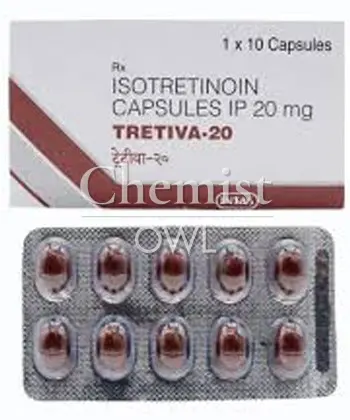
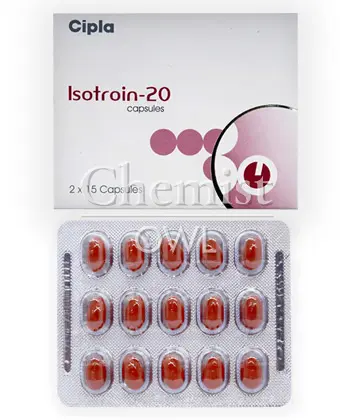
Severe nodulocystic acne and acne conglobata can cause extensive scarring and psychosocial distress. Isotretinoin, a systemic retinoid, is indicated for these recalcitrant inflammatory acne forms after failure of standard topical and antimicrobial therapies. The active compound is 13-cis-retinoic acid, administered orally, which induces profound changes in sebaceous glands, keratinization, and inflammatory pathways, yielding durable improvement in lesion burden.
Isotretinoin is formulated as oral capsules for once-daily administration. Treatment courses are typically weight-based and span several months, guided by clinical response and tolerability. Given the risks associated with systemic retinoids, therapy requires specialist supervision, baseline assessment, periodic laboratory monitoring, and adherence to regulatory safety programs where applicable.
Primary indications include severe nodular or conglobate acne that is resistant to conventional systemic antibiotics and topical regimens, with persistent inflammatory lesions and a high likelihood of scarring. Isotretinoin is capable of reducing sebaceous gland size and sebum production, thereby limiting bacterial colonization and inflammatory cascades. Dosing is typically in the range of 0.5–1 mg/kg per day, continued for approximately 15–20 weeks or longer as clinically indicated, followed by gradual cessation while monitoring for relapse.
Secondary indications consist of selected off-label uses in dermatology, usually after thorough specialist evaluation. In carefully chosen patients with hidradenitis suppurativa or certain keratinization disorders unresponsive to standard therapy, isotretinoin may reduce sebum and normalize aberrant keratinization, yielding partial or sustained improvement. The evidence base for these indications derives from small studies and case series; treatment should be individualized, with close monitoring for adverse effects and adherence to regulatory safety requirements where relevant.
In highly selected cases, isotretinoin may be considered for persistent, disfiguring acne in adolescents and adults who have exhausted approved options. The decision to pursue retreatment or dose modification rests on prior response, tolerance, and the risk–benefit assessment conducted by dermatology specialists. Pregnancy potential remains a critical consideration in female patients of reproductive potential, and appropriate counseling is required when discussing any off-label use.
During therapy, clinicians assess comorbidities that may influence tolerability, such as hepatic disease, dyslipidemia, or psychiatric history. Platelet counts and electrolyte status are not routinely altered by isotretinoin, but baseline and periodic testing of liver enzymes and lipids often guides monitoring, especially at higher doses or prolonged courses.
Isotretinoin exerts its effects primarily through retinoid pathways. After oral absorption, 13-cis-retinoic acid acts as a ligand for retinoic acid receptors (RARs) and retinoid X receptors (RXRs) in skin tissues, altering gene transcription that governs keratinocyte differentiation and sebocyte activity. This transcriptional modulation leads to reduced sebaceous gland size and lower sebum output, diminishing the milieu that supports Propionibacterium (Cutibacterium) acnes growth and inflammatory signaling.
Concomitantly, isotretinoin normalizes follicular keratinization, reducing comedogenesis and the formation of inflammatory nodules. It also exerts anti-inflammatory effects by downregulating proinflammatory mediators and altering immune cell function within the pilosebaceous unit. The net result is a substantial reduction in acne lesion count and a decreased tendency toward new lesion formation, with partial restoration of skin architecture in many patients.
Isotretinoin is a highly teratogenic agent. In females of reproductive potential, strict risk management protocols and effective contraception are mandatory during therapy and for a defined period after cessation. Pregnancy testing is required before, during, and after treatment in applicable programs. Other serious adverse effects include hepatotoxicity and dyslipidemia; baseline and periodic liver function tests and lipid panels are commonly employed to monitor safety, especially at higher doses.
Common, dose-related adverse effects include mucocutaneous dryness (lips, skin, and mucous membranes), cheilitis, nasal irritation, and photosensitivity. Dermatologic dryness may progress to dermatitis or fissuring; patients should use emollients and adhere to gentle skin care. Musculoskeletal symptoms such as arthralgia or myalgia can occur, particularly in adolescents, and require clinical evaluation if persistent or disabling.
Neuropsychiatric symptoms—mood changes, depression, and, rarely, suicidality—have been reported anecdotally; clinicians should monitor mood and behavior, particularly in patients with preexisting psychiatric histories. Long-term isotretinoin use necessitates vigilance for laboratory abnormalities, monitoring for signs of inflammatory bowel disease in rare cases, and consideration of drug interactions with concomitant medications that affect lipid metabolism or hepatic function.
Oral isotretinoin is rapidly absorbed, with higher systemic exposure when taken with fatty meals. It is extensively metabolized in the liver to active and inactive metabolites, including 4-oxo-isotretinoin, and is distributed mainly in lipid-rich tissues due to high lipophilicity. Elimination occurs via hepatic pathways with a variable terminal half-life influenced by dose, formulation, and hepatic function.
Dosing is typically weight-based and titrated to achieve a therapeutic response while balancing adverse effects. In female patients of reproductive potential, dosing and monitoring are guided by regulatory requirements and local clinical guidelines, including contraception planning, pregnancy testing, and patient education regarding teratogenic risks. In patients with hepatic impairment or significant dyslipidemia, dose adjustments and enhanced monitoring may be required to mitigate safety concerns.
14–21 days. Free from £151.17 .
5–9 days. £22.68
−10% when paying with cryptocurrency.
−10% on all repeat orders.
All orders are packed in neutral, unbranded boxes with no product name on the outside.