📞  — free, 24/7
— free, 24/7 — free, 24/7| Package | Price per Dose | Price | |
|---|---|---|---|
| 252 pills | £1.29 | £406.33 £325.07 Free shipping | |
| 189 pills | £1.39 | £328.46 £262.77 Free shipping | |
| 126 pills | £1.64 | £259.09 £207.27 Free shipping | |
| 84 pills | £1.86 | £195.37 £156.30 Free shipping | |
| 63 pills | £2.00 | £158.56 £126.85 | |
| 2 pill | £2.42 | £63.70 £50.96 | |
| 252 pills | £1.18 | £370.94 £296.75 Free shipping | |
| 189 pills | £1.34 | £315.72 £252.57 Free shipping | |
| 126 pills | £1.71 | £269.00 £215.20 Free shipping | |
| 84 pills | £2.04 | £213.78 £171.02 Free shipping | |
| 63 pills | £2.25 | £176.97 £141.57 | |
| 2 pill | £2.91 | £76.44 £61.15 |
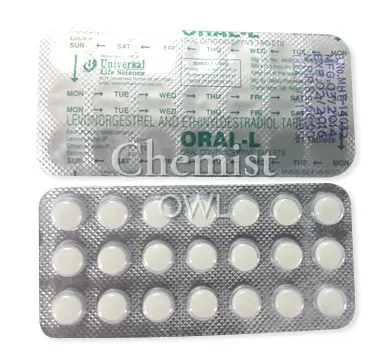
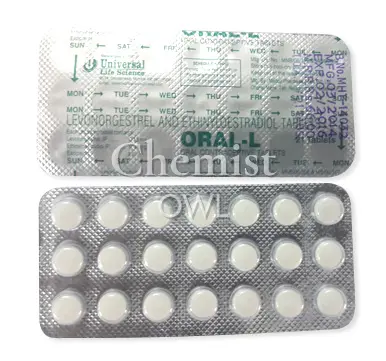
Since its introduction in the 1960s, the combination of levonorgestrel and ethinylestradiol has become one of the most widely prescribed hormonal contraceptives worldwide. The fixed-dose regimen provides reliable cycle control through suppression of ovulation and modulation of the endometrium. The product concept relies on concurrent estrogen and progestin activity to achieve predictable bleeding patterns and high contraceptive efficacy.
Levonorgestrel supplies potent progestational activity, while ethinylestradiol contributes the estrogenic component that stabilizes the endometrium and enhances feedback regulation of the hypothalamic‑pituitary axis. In standard regimens these agents are delivered in defined doses to maintain consistent suppression of the midcycle gonadotropin surge and to minimize breakthrough bleeding. Clinically, the combination is formulated in multiple dosing schemes to accommodate patient preference and tolerability.
The primary indication is contraception. When taken as prescribed, the combination provides high contraceptive effectiveness and a favorable safety profile for many users. It is also utilized to achieve regular, predictable menses and to reduce menstrual irregularities associated with anovulatory cycles.
Secondary indications include cycle regulation of dysmenorrhea and menorrhagia, offering symptomatic relief through endometrial stabilization and reduced prostaglandin activity. Some regimens are employed for hormonal acne control and to improve premenstrual syndrome symptoms in appropriately selected patients. In select cases, extended or continuous dosing is used to suppress menses for personal, occupational, or medical reasons, under clinical supervision.
Additional conditions encountered in practice may include oligomenorrhea or polymenorrhea where hormonal regulation is desired, or for endometrial protection in high-risk individuals when combined regimens are indicated. The choice of formulation, dosing interval, and duration is individualized based on age, comorbidity, and patient preference, with ongoing monitoring for adverse effects or contraindications.
The principal therapeutic effect derives from ovulation suppression. Ethinylestradiol inhibits the hypothalamic-pituitary axis, reducing FSH stimulation and blunting the LH surge that triggers ovulation. Levonorgestrel provides robust progestin activity that further suppresses GnRH release, thickens cervical mucus, and induces secretory changes in the endometrium that are unfavorable to implantation.
Consequent endometrial stabilization contributes to predictable bleeding patterns, while cervical mucus becomes less penetrable to sperm. In addition, hepatic metabolism of ethinylestradiol and levonorgestrel influences binding proteins and coagulation factors, which can modulate systemic effects and risk profiles. Collectively, these actions yield reliable contraception and cycle control with a characteristic, regular bleeding profile in compliant users.
Absolute contraindications include a history of venous or arterial thromboembolism, estrogen-sensitive malignancy, significant liver disease, pregnancy, and uncontrolled hypertension. Caution is advised in smokers over 35 years old and in women with major cardiovascular risk factors or complex migraine patterns. Healthcare providers assess individual risk before initiating therapy and monitor periodically for new contraindications or adverse events.
Common adverse effects are usually mild and transient, such as nausea, breast tenderness, breakthrough bleeding or spotting, headaches, and mood changes. Weight fluctuations and changes in libido may occur in some patients. Rare but serious risks include venous thromboembolism, ischemic stroke or myocardial infarction, particularly in high-risk populations. Drug interactions with hepatic enzyme inducers or certain antimicrobials can reduce contraceptive effectiveness and warrant regimen adjustment or additional precautions.
14–21 days. Free from £151.02 .
5–9 days. £22.65
−10% when paying with cryptocurrency.
−10% on all repeat orders.
All orders are packed in neutral, unbranded boxes with no product name on the outside.